

Care labels read like legal text because they are written to survive the worst washing machine you could own. You do not need to decode every symbol — you need one habit per fabric. Our rail is mostly cotton tees and shirts, knitted sweaters and cardigans, and fleece sweatshirts, so those are the three that matter.
Cotton tees and shirts
Wash cold, turn inside out, and pull the shirt straight while it is still damp — thirty seconds of reshaping the collar and hem does more than any detergent upgrade. Hang or lay flat to dry when you can. A hot dryer is what twists side seams and shrinks body length over a season, not the wash itself.
Knitwear and cardigans
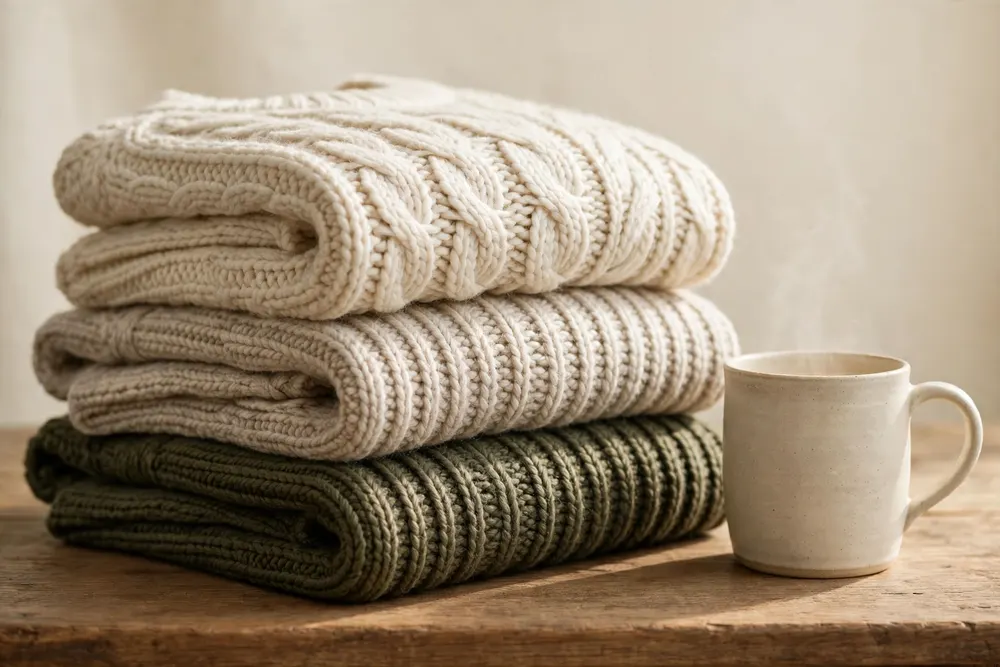
Knits need less washing than you think. Air a sweater on a chair overnight and it is usually ready to wear again; wash every few wears unless it is actually dirty. When you do wash: cool water, gentle cycle, then dry flat on a towel so the weight of the water does not stretch the shoulders out of shape. Fold knits in a drawer or on a shelf — a hanger will grow little horns at the shoulders within a month. If pills appear, a fabric comb takes them off in a minute; pick them, do not pull them.
Sweatshirts and fleece
Turn fleece inside out so the brushed side is protected, wash with similar soft things rather than towels and denim, and dry on low. High heat melts the brushed finish that makes fleece feel like fleece. Zip and button everything before it goes in — open hardware is what chews up the rest of the load.
Vests and structured pieces
Pieces with shape — a vest with a lining, a corduroy shirt — hold up best with fewer, gentler washes. Spot-clean first, wash cool when you must, and store them buttoned so the front keeps its line.
None of this is precious. It is three habits — cold water, flat for knits, low heat for fleece — and they will add a year or more to everything on the rail.