

In-between weather punishes a single heavy layer. You are warm on the walk out and carrying a coat by lunch. Dressing in layers only works if each layer still looks finished when the ones above it come off — that is the whole trick.
Layer one: the base you would wear alone
Start with a tee or a tank you would happily wear by itself at noon. If the base looks like underwear, every layer you remove exposes a problem instead of an outfit. A clean plain tee is the safest base there is; a tank works when the midday warm spell is real.
Layer two: the shirt or sweatshirt
This is the layer that does the morning work. A button-up worn open reads as a light jacket and comes off without a fight. A sweatshirt is warmer and simpler, and it is the better call when the day starts below fifty. Either way, this layer should contrast the base — different color or different texture — so the outfit looks chosen, not stacked.
Layer three: the piece that changes the temperature
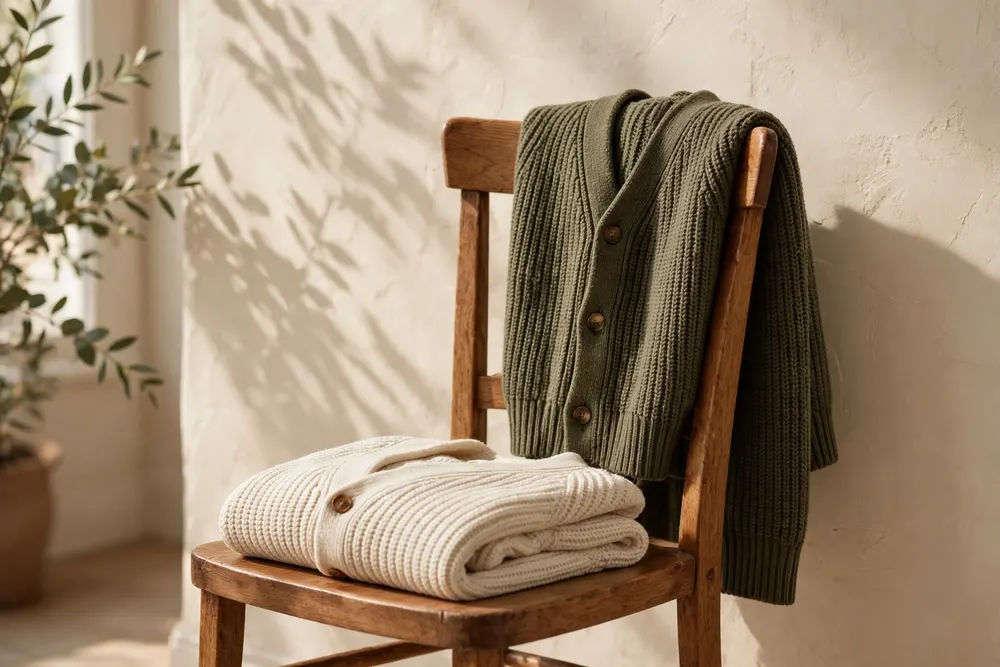
On top, choose by how cold the cold part of the day actually is. A cardigan or knit is the flexible option: buttons open at noon, closed at six, sleeves that push up. A vest is the underrated one — it warms the core, leaves the arms free, and goes over a sweatshirt as easily as over a shirt. If you run warm, the vest is your layer three; if you run cold, take the knit.
Two combinations that cover most days
- Mild swing (50s to 70s): tee, open shirt, vest in the bag for the evening.
- Real swing (40s to 60s): tee, sweatshirt, cardigan over the top, buttons open by midday.
Keep the colors in one family — two neutrals and one clay, navy, or forest tone — and every combination above works without thinking. That is the point of a layer system: the weather decides, you do not have to.